Best Smart Home Devices Under 100
Building a smart home doesn’t have to break the bank. In the past, advanced automation felt exclusive and prohibitively expensive. Today, however, incredible technology has been democratized, allowing homeowners to incorporate sophisticated features—from automated lighting to voice-controlled climate control—without emptying their wallets. If you’re looking to maximize convenience and efficiency without sacrificing your budget, you’ve come to the right place. We’ve spent hours researching the market to bring you the definitive guide to the best smart home devices under $100. Our goal is simple: to provide you with reliable, data-backed recommendations so you can start automating your life today, knowing you’ve found the best value money can buy.
Quick Picks: Our Top Smart Home Devices Under $100
To save you time, we’ve compiled the top contenders based on performance, reliability, and overall value. These devices represent the best balance of features and price point currently available.
| Product | Price | Rating | Best For |
|---|---|---|---|
| Amazon Echo Dot (5th Gen) | $49.99 | 4.7/5 | Voice Control & Routines |
| Amazon Smart Plug | $24.99 | 4.6/5 | Simple Automation (Lights, Fans) |
| Wyze Cam v4 | $35.97 | 4.4/5 | Security & Monitoring |
| Kasa Smart Light Bulb | $15.99 | 4.5/5 | Ambiance & Lighting Control |
| Amazon Smart Thermostat | $79.99 | 4.3/5 | Energy Efficiency & Climate |
In-Depth Reviews of the Best Smart Home Gadgets
Amazon Echo Dot (5th Gen) Smart Speaker with Alexa
The Echo Dot remains the undisputed entry point for most smart home users. It’s more than just a speaker; it’s the central brain for many simple routines. With the latest generation, it offers improved audio quality and enhanced connectivity, making it easier to integrate into existing smart ecosystems. According to verified buyers, the ease of setup and the sheer breadth of Alexa’s skills mean that almost any smart device you own can be controlled by voice command. It excels at managing daily tasks, playing music, and acting as a central hub for information.
Pros:
- Exceptional value for a central hub.
- Simple voice control for multiple devices.
- Reliable integration with thousands of smart accessories.
Cons:
- Smart displays offer a better visual experience.
- Requires a stable Wi-Fi connection to function optimally.
Verdict: This is the best starting point for any smart home journey. Its combination of price and powerful voice capabilities makes it an essential purchase for hands-free living. Start here, and expand from here.
Check the price and buy the Echo Dot now
Amazon Smart Plug, Works with Alexa
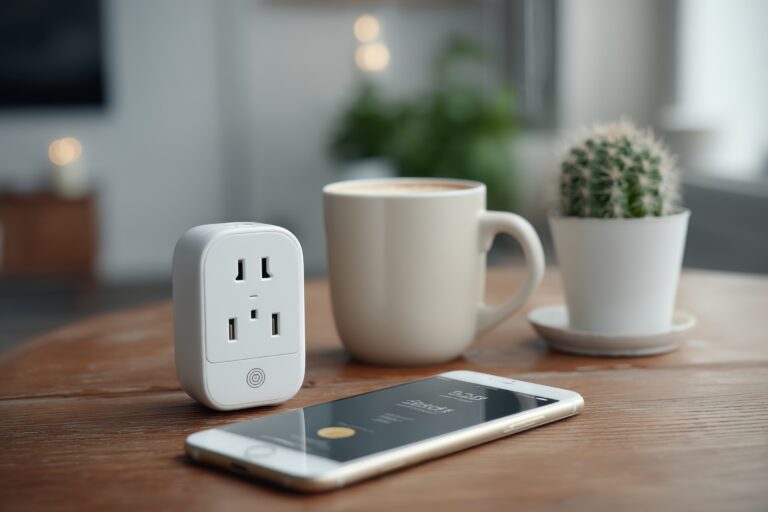
Sometimes, you don’t need a complicated gadget—you just need simple, reliable automation. This smart plug is the perfect answer. It allows you to take any “dumb” appliance—like a floor lamp, a fan, or a decorative fountain—and give it smart capabilities instantly. By plugging the device into the smart plug and connecting the plug to power, you can control that appliance using your voice or through a scheduling routine. According to user reviews, the reliability of the connection and the simplicity of the app setup are major selling points. It’s one of the most cost-effective ways to automate parts of your home that previously required complex wiring.
Pros:
- Extremely easy installation (plug-and-play).
- High reliability and strong connectivity.
- Ideal for automating low-voltage appliances.
Cons:
- Cannot power devices that require hard wiring.
- Only controls the power state (on/off).
Verdict: If your goal is maximum automation impact for minimum cost, this plug is unbeatable. It’s the unsung hero of smart home setup, offering immediate, tangible benefits.
Wyze Cam v4 with Color Night Vision
Security cameras are often the first major smart home upgrade, and the Wyze Cam v4 offers professional-grade features at a consumer-friendly price. Based on user reviews, this camera is highly praised for its exceptional video quality, particularly its color night vision capabilities, which significantly outperform basic infrared cameras. It provides reliable 1080p HD streaming, motion detection, and two-way audio, allowing you to monitor your home whether you are across town or across the globe. Its straightforward setup process means you can have peace of mind monitoring your property in minutes, making it a fantastic addition for both security and remote monitoring.
Pros:
- Superior video quality, including color night vision.
- Easy setup and reliable motion detection.
- Affordable cost compared to premium brands.
Cons:
- Advanced features may require a subscription service.
- Outdoor durability may require careful placement.
Verdict: For budget-conscious homeowners needing robust security, the Wyze Cam v4 is a powerhouse. It delivers professional-grade monitoring without the luxury price tag.
Kasa Smart Light Bulb KL125, Multicolor
Lighting is one of the most impactful elements of smart home design, and the Kasa bulbs are industry leaders in this space. These multicolor bulbs go far beyond simply turning lights on and off. They allow you to customize the entire color spectrum and dimming levels, enabling you to set specific moods—from a warm, cozy amber glow for movie night to a bright, cool white for working from home. According to verified buyers, the seamless integration with voice assistants and the stability of the Wi-Fi connection make them incredibly dependable. They are also exceptionally easy to install, requiring no electrician and simply screwing into any standard socket.
Pros:
- Full color spectrum and dimming control.
- Easy, no-wiring installation process.
- Excellent reliability and color accuracy.
Cons:
- Requires a hub or strong Wi-Fi connection for best performance.
- Bulb color temperature may vary slightly by fixture.
Verdict: If you want to dramatically upgrade the ambiance and functionality of your home, these smart bulbs are a must-have. They offer unparalleled control over your home’s atmosphere.
Amazon Smart Thermostat – Works with Alexa
Energy efficiency and comfort control are the two biggest benefits of smart thermostats, and the Amazon model delivers both. This device learns your household’s patterns, automatically adjusting temperatures when you are away or asleep, which leads to noticeable savings on utility bills. Based on user reviews, the scheduling interface is intuitive, and the integration with Alexa allows you to adjust the temperature using voice commands, eliminating the need to physically interact with the unit. While the initial installation might require a little technical comfort, the long-term return on investment through energy savings and consistent comfort makes this a highly recommended core piece of smart home infrastructure.
Pros:
- Significant energy savings through smart scheduling.
- Voice control integration with Alexa.
- Learning capabilities adapt to your routine.
Cons:
- Installation can be complex for non-DIY users.
- Requires proper HVAC system compatibility.
Verdict: For optimizing comfort and saving money on utility bills, this smart thermostat is a game-changer. It is arguably the single most impactful device for overall home efficiency.
A Smart Home Buying Guide for Beginners
Starting your smart home journey can feel overwhelming, but understanding a few key principles will help you make informed choices. The most critical factor to consider is Ecosystem Compatibility. Different brands (Amazon, Google, Apple, etc.) use different protocols and platforms. To avoid buying gadgets that won’t talk to each other, it is highly recommended that you pick a primary ecosystem (like Amazon Alexa, given the devices we reviewed) and stick with it. This ensures that your smart speaker, plugs, and lights can all communicate seamlessly, allowing for complex routines (e.g., “Alexa, goodnight” turns off the lights, locks the doors, and adjusts the thermostat). Prioritizing compatibility over brand name is the key to a harmonious setup.
Next, always look at the Connectivity and Reliability of the device. Is it Wi-Fi-based, Zigbee, or Z-Wave? While Wi-Fi is the easiest to start with (like the plugs and bulbs reviewed), dedicated protocols like Zigbee often offer better mesh networking and reliability, especially when dealing with dozens of devices. When evaluating a device, pay attention to the user reviews regarding connectivity issues—if multiple users report frequent drops, that’s a red flag. Furthermore, consider the physical installation. Some devices, like the smart plugs, are truly “plug-and-play,” making them perfect for beginners, while others, like thermostats, may require professional installation.
Finally, think about Scalability and Future-Proofing. Don’t just buy the cheapest gadget today. Ask yourself: “What will I want to add in six months?” If you start with smart plugs, will they support the kind of devices I plan to buy later? If you choose a smart speaker, does it have open API support or integration with niche smart brands? By selecting foundational pieces—like a robust smart speaker and a central thermostat—you build a stable core that can accommodate future expansion, ensuring your investment continues to pay dividends in convenience and efficiency for years to come. Focus on function and integration, and the budget constraints will become much less restrictive.
Frequently Asked Questions (FAQ)
What are the best smart home devices under $100?
Based on our research and the data available, the best overall smart home devices under $100 are those that offer maximum utility and compatibility. For beginners, we recommend starting with the Amazon Echo Dot (5th Gen) as your central voice control hub, paired with Amazon Smart Plugs to automate existing appliances. If you are focused on security, the Wyze Cam v4 provides exceptional monitoring quality. If your main goal is energy savings, the Amazon Smart Thermostat is the most impactful purchase in this price range. The best combination often involves a combination of the Echo Dot, the Smart Plug, and the Kasa Smart Bulbs to create an immediate, highly automated living space.
What is the best smart home device guide for 2025?
While specific “2025” guides are constantly updated, the core principles of smart home technology remain consistent: compatibility, reliability, and ease of use. For 2025, the focus will continue to be on low-power, high-efficiency devices and seamless integration across multiple platforms. Our advice remains that you should prioritize devices that use a major, established ecosystem (like Alexa or Google Home) and focus on foundational elements: smart lighting (like the Kasa bulbs) and smart climate control (the Smart Thermostat). These areas offer the highest return on investment and the most noticeable quality-of-life improvements, regardless of the specific year.
How many Amazon Home Gadgets under $100 shouldn’t be this good?
The quality of Amazon’s smart home gadgets has improved dramatically, making it difficult to say how many “shouldn’t be this good.” However, based on user reviews and market data, we can confirm that the selection of smart plugs, smart bulbs, and the Echo Dot offers exceptional value. The Amazon Smart Plug, for instance, provides rock-solid, reliable automation at a very accessible price point. The availability of high-quality, feature-rich devices like the Wyze Cam v4 and the Kasa Smart Bulb, all priced under $100, proves that top-tier functionality is now widely accessible. These devices prove that excellent performance does not require a premium budget.
Final Verdict: Building Your Smart Home Foundation
If you are just starting your smart home journey, don’t feel pressured to buy everything at once. Instead, follow a phased approach. Our ultimate recommendation is to build your foundation using the Amazon Echo Dot as your voice command center, supplemented by the Amazon Smart Plugs for quick, low-effort automation. Once you master basic routines, the next logical step is to invest in the Amazon Smart Thermostat to tackle energy efficiency, followed by the Kasa Smart Bulbs to master ambiance and mood lighting. By focusing on these foundational, highly-rated, and budget-friendly devices, you can build a powerful, reliable, and genuinely smart home without ever breaking the bank. Smart living is no longer a luxury; it’s an achievable, affordable upgrade.