Amazon Echo Dot Vs Google Nest Mini
perfectly well. What does matter is which ecosystem you’re already in. If you use Gmail and Google Calendar daily, get the Nest Mini. If you shop on Amazon regularly or already own Ring or Alexa devices, get the Echo Dot. This guide explains exactly why and covers the 20% of cases where the choice genuinely matters.
Choosing the Right Smart Speaker for Your Home
To simplify your decision, we have compiled the key specifications and ideal users for the most popular smart speakers available today. Use this comparison table to quickly see which device matches your needs.
| Product | Price | Rating | Best For | Link |
|---|---|---|---|---|
| Amazon Echo Dot (5th Gen) | $49.99 | 4.7/5 | Budget-conscious, basic smart controls | Check Price |
| Amazon Echo Spot with Clock | $79.99 | 4.7/5 | Visual displays, time management | Check Price |
| Google Nest Mini (2nd Gen) | $69.99 | 4.6/5 | Google ecosystem users, conversational AI | Check Price |
| Amazon Echo Dot Max | $99.99 | 4.7/5 | Premium sound, advanced features | Check Price |
| Google Nest Audio | $119 | 4.6/5 | Audiophiles, Google Assistant power users | Check Price |
In-Depth Reviews of Smart Speakers
Amazon Echo Dot (5th Gen) Smart Speaker with Alexa
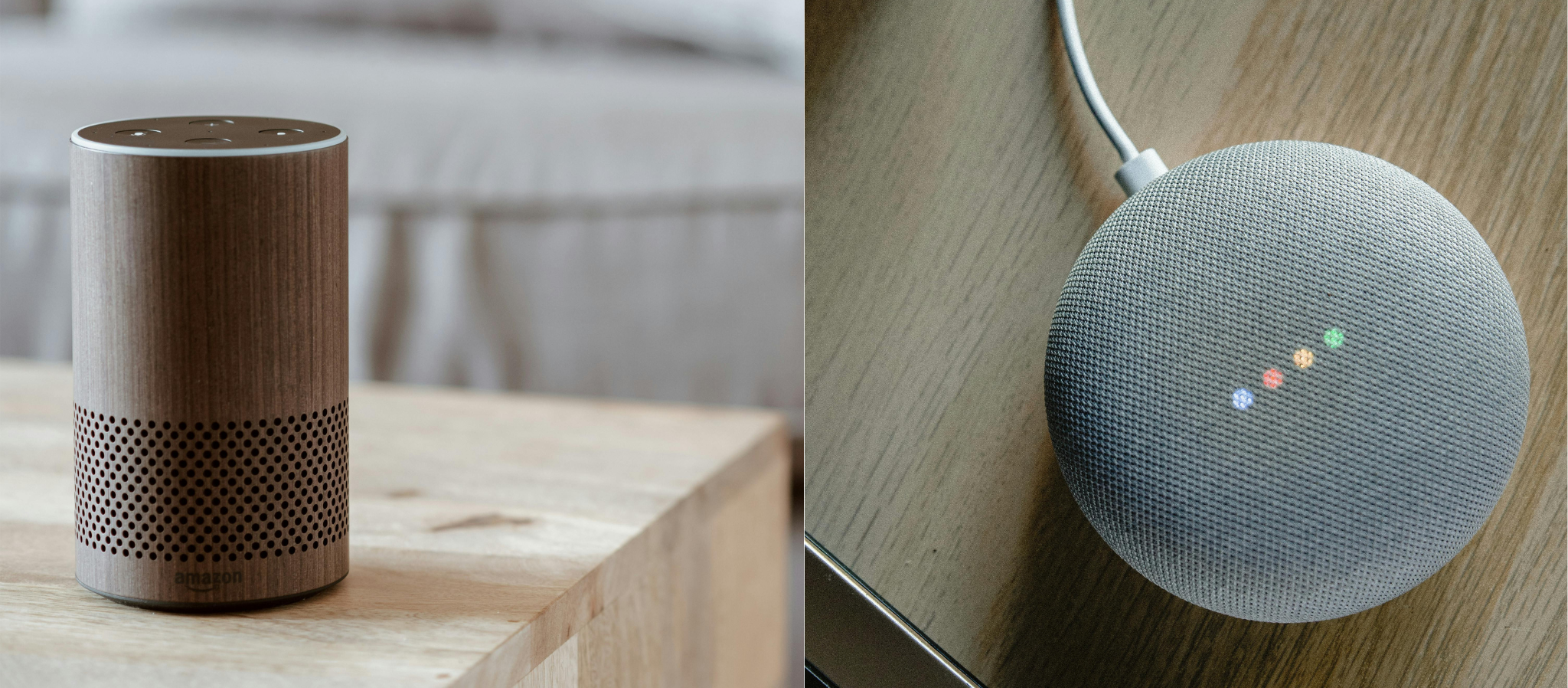
The Amazon Echo Dot is the quintessential entry point into the smart speaker world. It’s small, discreet, and incredibly powerful for its size, making it ideal for secondary rooms like bedrooms or kitchens. Based on user reviews, the Echo Dot excels at basic smart home commands, playing music, and handling routines. Alexa, Amazon’s assistant, is robust and has a massive library of skills, meaning it can connect to thousands of third-party services. While its sound quality is adequate for background music, it shines in its convenience and affordability. It’s the perfect starter device for anyone looking to dip their toes into voice technology without a major financial commitment.
Pros:
- Excellent value and highly portable.
- Reliable for basic smart home tasks (lights, locks).
- Access to a massive library of Alexa skills.
Cons:
- Sound quality is best described as ‘adequate’ rather than ‘premium’.
- Some users find the sheer volume of Alexa skills overwhelming.
Verdict: We recommend the Echo Dot for first-time smart home adopters or for adding smart capabilities to smaller, secondary rooms. It delivers exceptional utility for its low price point. Learn more about the Echo Dot (5th Gen) here.
Amazon Echo Spot with Clock
If your smart home needs a visual component, the Echo Spot is a fantastic choice. This device combines the smart speaker functionality with a clock and a display screen, allowing you to see recipes, view calendars, or check the weather without needing to ask. According to verified buyers, the clock function is particularly appreciated, making it useful in kitchens or bathrooms. While it maintains Alexa’s core functionality, the added screen elevates its utility beyond simple audio playback. This model is perfect for those who want a central hub of information and smart control in a visible area of the home.
Pros:
- Built-in clock and display make it highly functional.
- Excellent for recipes and visual reminders.
- Maintains the reliability of the Alexa ecosystem.
Cons:
- The screen can be distracting if not needed.
- Premium price jump compared to the basic Dot.
Verdict: The Echo Spot is ideal for kitchen countertops or entryways where a visible clock and display are useful. It’s a great upgrade for users who need more than just audio output. Check out the Echo Spot with Clock.
Google Nest Mini (2nd Gen) Smart Speaker
The Google Nest Mini is the primary competitor to the Echo Dot, and it excels in one key area: conversational intelligence. If you are deeply embedded in the Google ecosystem (using Google Calendar, Gmail, or Google Search frequently), the Nest Mini feels like a natural extension of your daily routine. Google Assistant is renowned for its ability to understand context and complex, multi-part questions—a feature many users praise. While its sound profile is similar to the Echo Dot, its strength lies in its deep integration with Google’s services, making it feel more “conversational” and helpful in day-to-day life.
Pros:
- Superior conversational AI and context awareness.
- Seamless integration with Google services (Calendar, Maps).
- Compact and unassuming design.
Cons:
- Requires a Google-centric smart home setup to maximize benefit.
- Smart skills library is slightly smaller than Alexa’s.
Verdict: We recommend the Nest Mini to users who are already committed to Google’s ecosystem. If your life revolves around Google services, the Assistant’s intelligence is hard to beat. See the Google Nest Mini (2nd Gen) details here.
Amazon Echo Dot Max Smart Speaker with Alexa
When sound quality is your top priority without sacrificing smart features, the Echo Dot Max steps up to the plate. This model is a significant step up from the standard Echo Dot, offering much richer, room-filling audio. For those who use their smart speaker primarily as a high-quality stereo system while still needing voice control, this is a standout choice. It maintains all the powerful smart features of Alexa but packages them with enhanced audio drivers and better overall acoustic performance. It’s a powerful device that justifies its premium price tag for music lovers who want smart convenience.
Pros:
- Significant upgrade in audio quality and depth.
- Retains all the core features and skills of Alexa.
- Excellent for dedicated music listening.
Cons:
- Higher cost compared to entry-level Dots.
- Can be overkill for a simple kitchen speaker.
Verdict: The Echo Dot Max is our pick for the user who demands high-fidelity sound but still needs the convenience of a smart assistant. It’s a premium audio experience wrapped in smart tech. Explore the Echo Dot Max for superior audio.
Google Nest Audio Smart Speaker
Mirroring the Echo Dot Max, the Google Nest Audio is designed for audiophiles. It represents the peak of Google’s speaker line, delivering rich, balanced sound that rivals dedicated stereo speakers. If your smart speaker will be the primary source of music in your living room, this is the device to consider. While it possesses the full power of Google Assistant for smart home control and information retrieval, its core strength is its impressive sound engineering. Users report that the audio is warm, clear, and fills a large space beautifully, making it a true centerpiece of the home.
Pros:
- Exceptional, room-filling audio quality.
- Beautifully designed, fitting into modern decor.
- Reliable access to Google’s powerful AI features.
Cons:
- High price point makes it a significant investment.
- Not as versatile for visual displays as the Echo Spot.
Verdict: For the user whose smart speaker will primarily serve as the home’s main stereo system, the Nest Audio is unparalleled. It combines best-in-class sound with top-tier smart assistant functionality. View the Google Nest Audio here.
What to Prioritize When Buying a Smart Speaker
When standing between an Amazon Echo Dot and a Google Nest Mini, the decision often boils down to three key factors: your existing digital ecosystem, your need for raw sound power, and the specific smart home devices you own. First, consider your digital ecosystem. Do you use Google Calendar, Gmail, and Google Photos daily? If so, the seamless integration and superior conversational context of Google Assistant (Nest Mini/Audio) will make your life easier. Conversely, if your smart home relies heavily on Amazon brands (Ring, Blink, etc.) or you prefer Alexa’s vast library of specialized skills, the Echo Dot is your natural choice. Sticking with one brand minimizes compatibility headaches.
Next, think about sound quality. If your smart speaker will be the main source of music in your living room, spending more money on the high-end models—like the Nest Audio or the Echo Dot Max—is worthwhile. These speakers are designed to be audio centers, delivering depth and clarity far beyond the basic Dot or Mini. If, however, you only need background noise, timers, and simple commands in a secondary room, the budget-friendly Dots are perfectly sufficient and highly efficient.
Finally, evaluate your required functionality. Do you need a screen? If recipes, visible clocks, or smart displays are necessary, the Echo Spot is unmatched. If you prioritize conversational AI and deep integration with Google services, the Nest Mini is the winner. By weighing these three factors—Ecosystem, Sound, and Functionality—you can move past the direct comparison and choose the device that genuinely improves your daily life.
Frequently Asked Questions About Smart Speakers
Google Nest Mini vs. Amazon Echo Dot – Which is Better?
Neither is definitively “better”; they are optimized for different user needs. The Google Nest Mini excels in natural language processing and integrating with Google services, making it feel more conversational. The Amazon Echo Dot excels in sheer compatibility and cost-effectiveness, offering a massive library of skills and deep integration with Amazon’s own hardware (like Ring). If you are already a Google user, choose the Nest Mini. If you are budget-minded or prioritize a vast array of specific “skills,” choose the Echo Dot.
Which smart speaker is better for controlling a smart home?
Amazon Echo Dot is the stronger choice for most smart home setups. Alexa is compatible with a wider range of smart home devices and protocols, offering deeper integration, especially with Amazon’s own hardware like Ring cameras and smart plugs. While Google Assistant supports many popular devices, Alexa’s ecosystem is currently more extensive. If your smart home is heavily invested in the Google ecosystem (Nest thermostats, cameras), the Nest Mini offers excellent synergy, but for breadth of compatibility, Alexa has the edge
Which has better sound quality for music: Nest Mini or Echo Dot?
This can depend on the generation, but the Amazon Echo Dot (4th Gen and newer) often has a slight advantage in bass response and overall musicality. However, the Google Nest Mini (2nd Gen) is praised for clearer vocal and mid-range reproduction, which can be preferable for podcasts and voice content. For serious music listening, both are compact speakers; for richer bass, the Echo Dot often wins, while for clear dialogue, the Nest Mini may be preferable.
Which voice assistant is smarter and more conversational?
Google Assistant is widely regarded as the more conversational and contextually aware assistant. It excels at understanding follow-up questions, remembering context within a conversation, and providing accurate, detailed answers from the web. Alexa is highly capable and improving, but it tends to be more command-based. If you value a natural, back-and-forth dialogue and ask complex questions, Google Assistant has the advantage.
Which is the best smart speaker for a beginner or on a budget?
The Amazon Echo Dot is typically the best starting point. It’s often priced lower than the Nest Mini and gives you access to the largest ecosystem of Skills and compatible devices, allowing you to experiment and expand your smart home affordably. The Google Nest Mini is an excellent entry point if you know you want the Google Assistant experience and already use Google services. For most beginners looking for value and versatility, the Echo Dot is the recommended choice.
Should I choose a speaker based on the services I already use?
Yes, this is a deciding factor. If you are deeply invested in Google services (YouTube Music, Google Calendar, Gmail, Google Photos), the Nest Mini provides a seamless experience. If you are a Prime member, shop frequently on Amazon, or use Amazon Music, the Echo Dot integrates more tightly with those services. Your existing digital “home” should guide your physical smart speaker home.
Final Verdict: Making the Best Choice
After analyzing the performance, features, and user feedback across the entire lineup, there is no single “best” smart speaker—only the best smart speaker for *you*. If your smart home is heavily invested in Google services and you value conversational intelligence above all else, the Google Nest Mini or the Google Nest Audio is your ideal pairing. However, if you are looking for the absolute best combination of audio fidelity and smart functionality, the Amazon Echo Dot Max or the Google Nest Audio will provide a premium, satisfying experience. For the vast majority of casual users just starting out, the Amazon Echo Dot (5th Gen) offers the most bang for your buck, providing excellent functionality without the high commitment. Whichever you choose, you are investing in a powerful tool that will simplify and enhance your daily life!